Built for advocates across all practice

Your junior counsel who never sleeps — and never files without you.

Complai drafts your pleadings, checks every citation before it turns against you, and remembers your case the way you do. It’s built for district court practice — where the caseload is heavy, the formats never match, and there’s no time to double-check everything by hand.

See How It Works
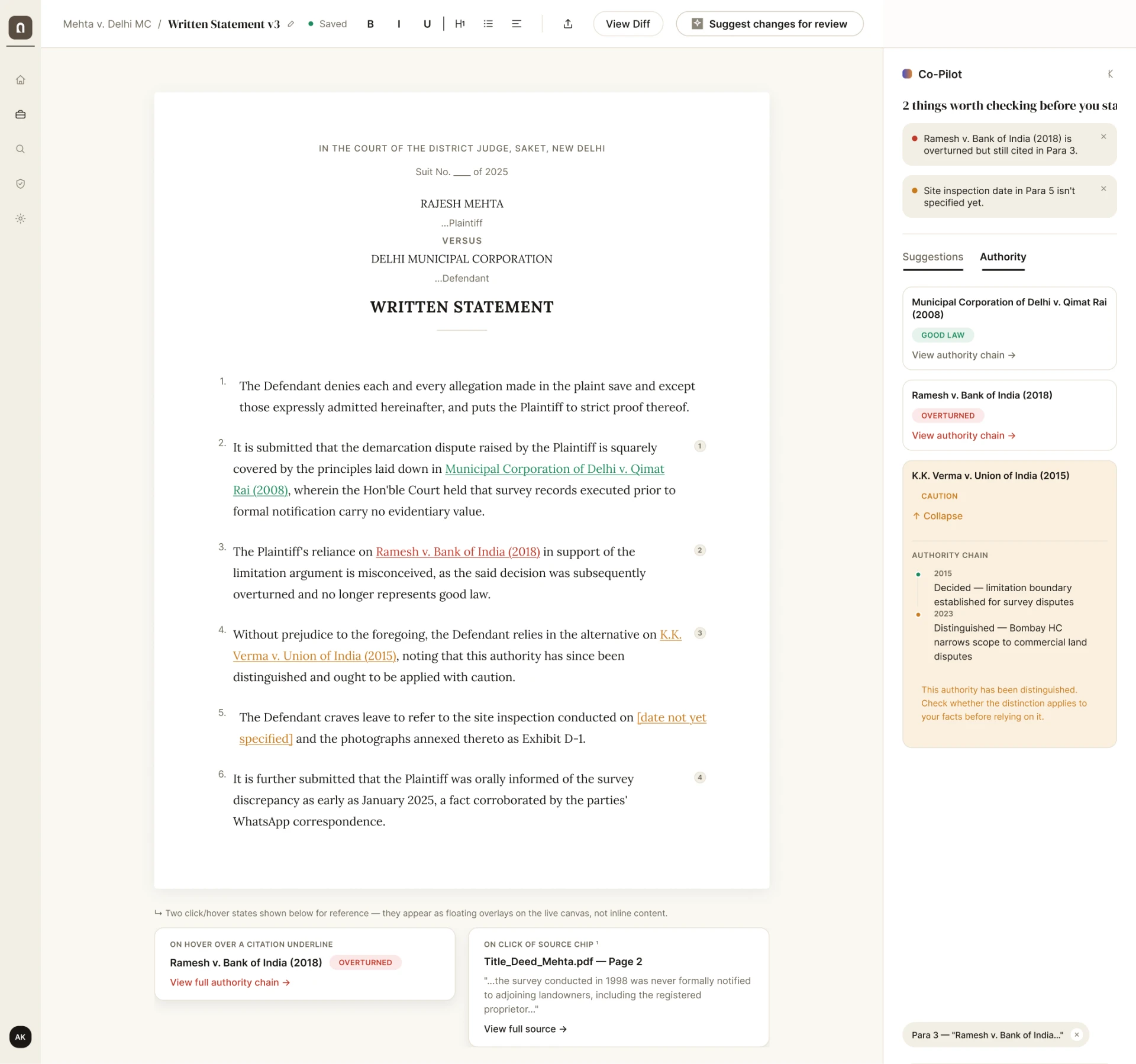
Complai workspace showing a written statement with live citation warnings and authority chain
0+Advocates and litigants onboarded
0+Courts researched
0Documents Complai files without your say-so
0%Of citations shown with their full history before you rely on them
Features

Everything a volume litigator actually needs, nothing they have to babysit

Complai isn’t a chatbot bolted onto a law library. It’s built around how district court practice actually runs — heavy caseloads, tight deadlines, and zero room for a citation that turns out to be dead law.

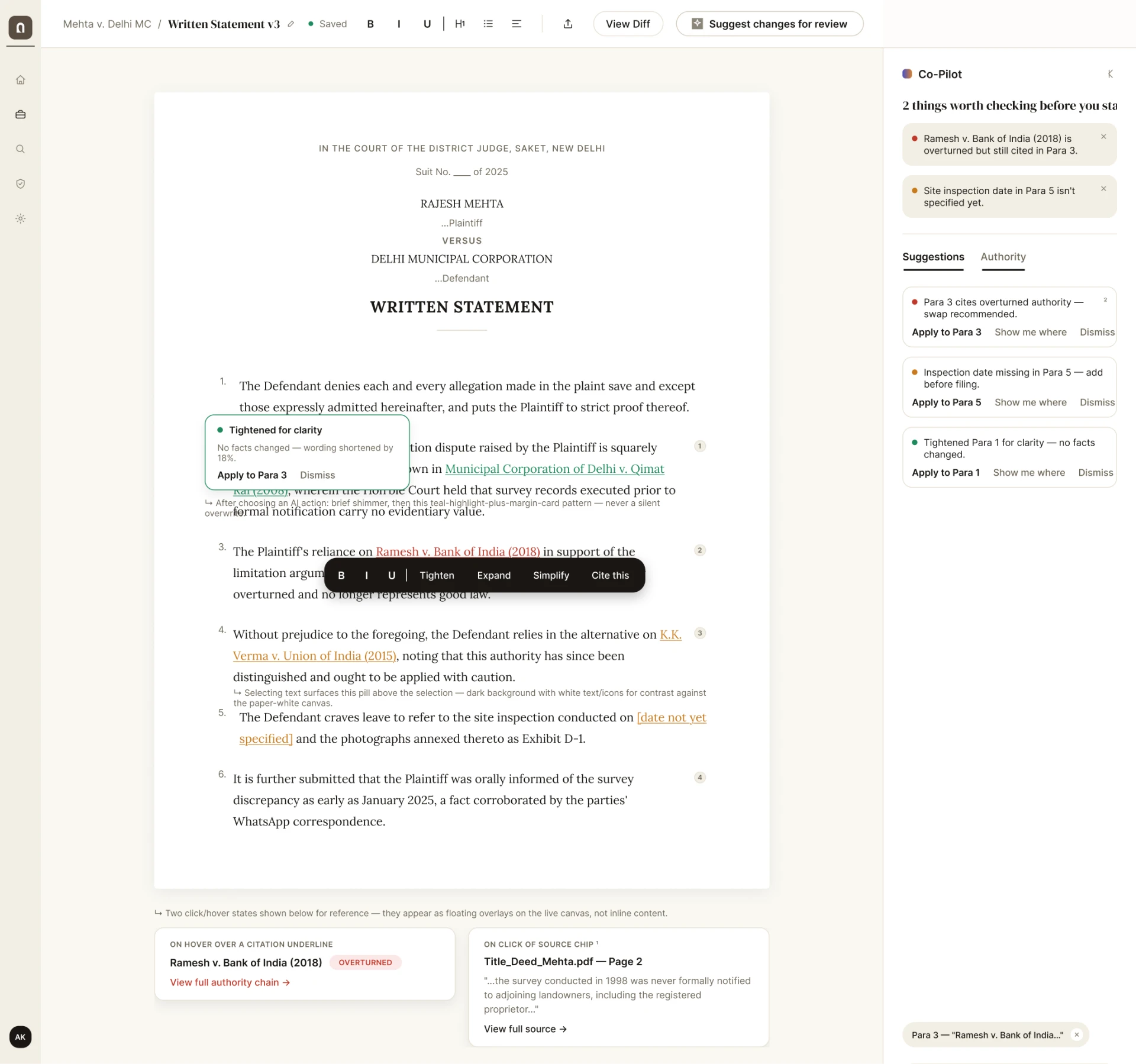
Complai drafting environment with a floating selection toolbar over a written statement
Language

Draft in the language your court actually works in.

Complai drafts, translates and checks pleadings in over 30 Indian languages and scripts — so a matter can be argued in your mother tongue, filed in the language the record demands, and read back to your client without a word getting lost in between.

30+Languages and scripts supported for drafting
Pan-IndiaDistrict courts, tribunals and High Court formats
  • Write in English, file in the regional language — or the other way round.
  • Legal terms, cause titles and prayer clauses kept in court-accepted form.
  • Every translated draft stays editable, and nothing is filed without your approval.
An advocate's desk with tied case files, a fountain pen and a laptop in warm daylight
Same draft, two records

“The plaintiff seeks interim injunction restraining the defendant…”

“वादी प्रतिवादीस प्रतिबंध करणारा अंतरिम मनाई हुकूम मागतो…”

Hindi, Marathi, Bengali, Tamil, Telugu, Kannada, Malayalam, Gujarati, Punjabi, Odia, Assamese, Urdu and more — including the Eighth Schedule languages.

The reality of district court practice

The work no one designed a tool for

District courts run most of India’s litigation — and get almost none of the legal-tech attention. Here’s what that actually looks like, day to day.

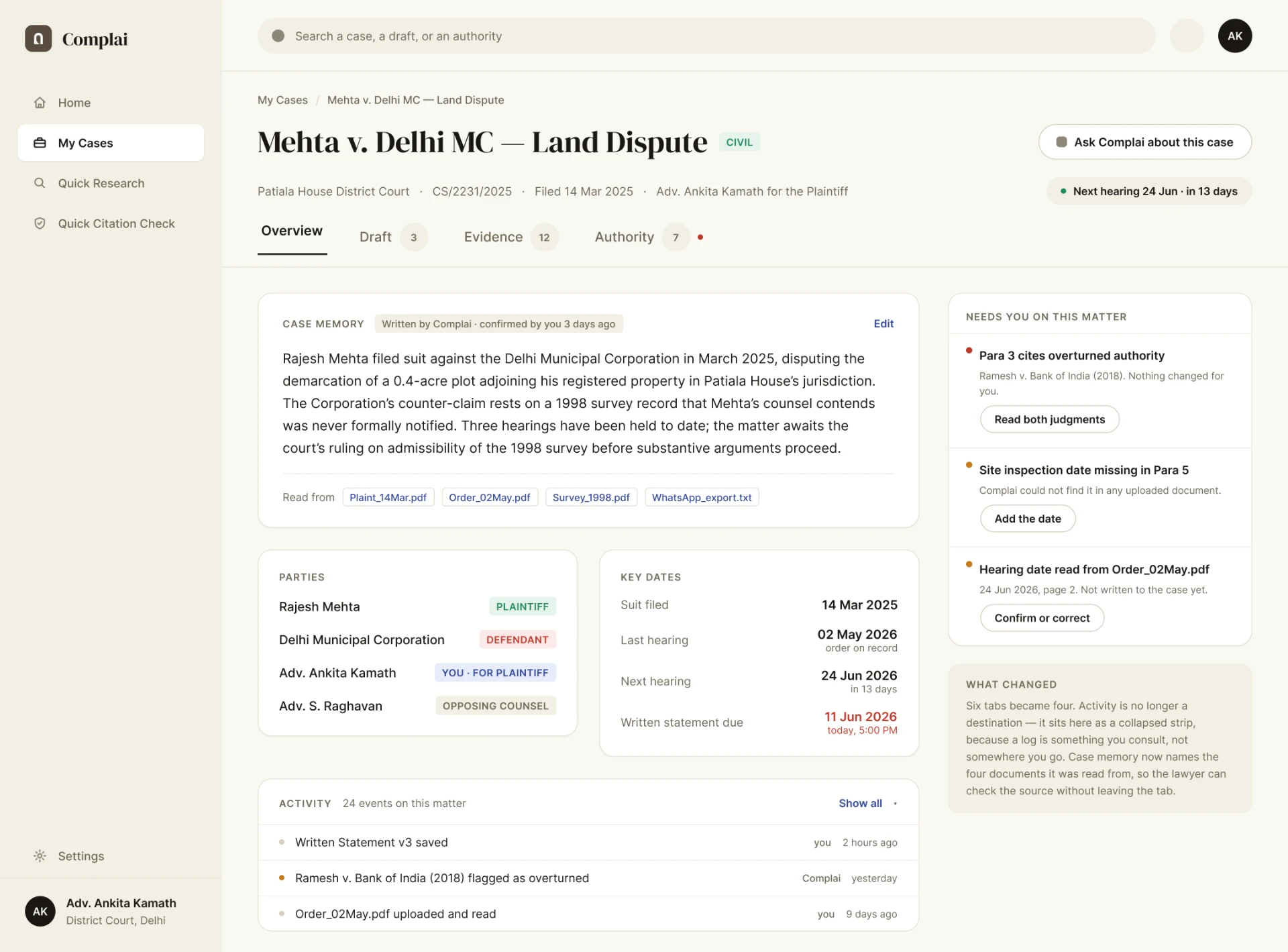
Complai case workspace overview showing case memory, parties, key dates and activity
The cost of no tooling

Small inefficiencies compound across every matter

When the tools don’t understand litigation, advocates become the integration layer — carrying facts, formats and legal history from one task to the next.

Senior advocate and juniors reviewing a matter together on a tablet in a district court library

Hours lost to repetition

Names, dates and case histories get typed again across every petition, reply and application.

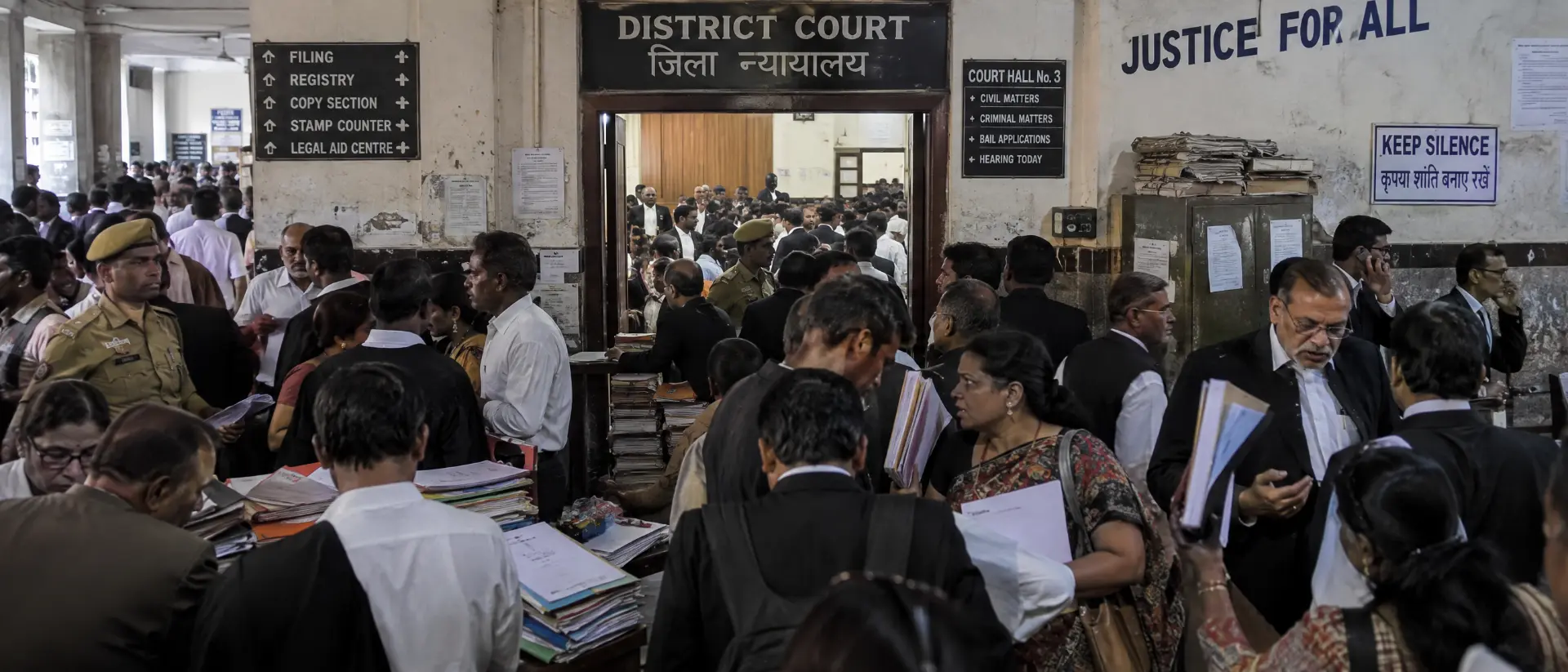
Advocates and litigants gathered in a busy district court corridor outside Court Hall No. 3

Authority checked too late

A familiar citation can change status after it enters your library — and before your next hearing.

Case files, loose notes and a phone spread across a legal desk

Facts scattered across files

The detail you need lives somewhere between a paper brief, a message thread and last month’s notes.

An advocate reviewing a legal document beside a drafting interface

Speed without control

Generic AI can produce text quickly. It cannot understand that the advocate must remain the final decision-maker.

What changes

From scattered work to a steady line of judgment.

Complai turns the daily friction into momentum — so you spend less time reconstructing the case and more time deciding it.
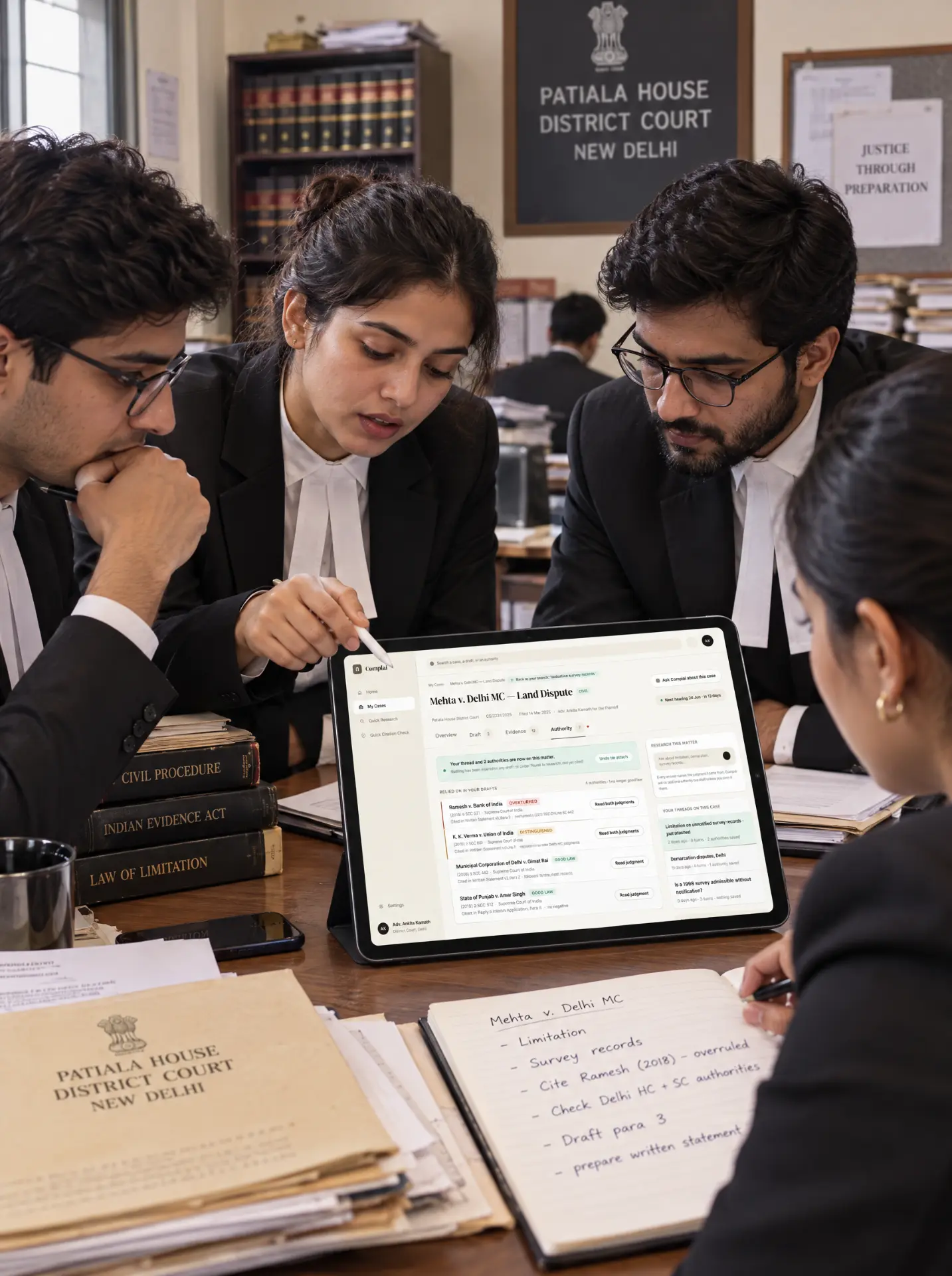
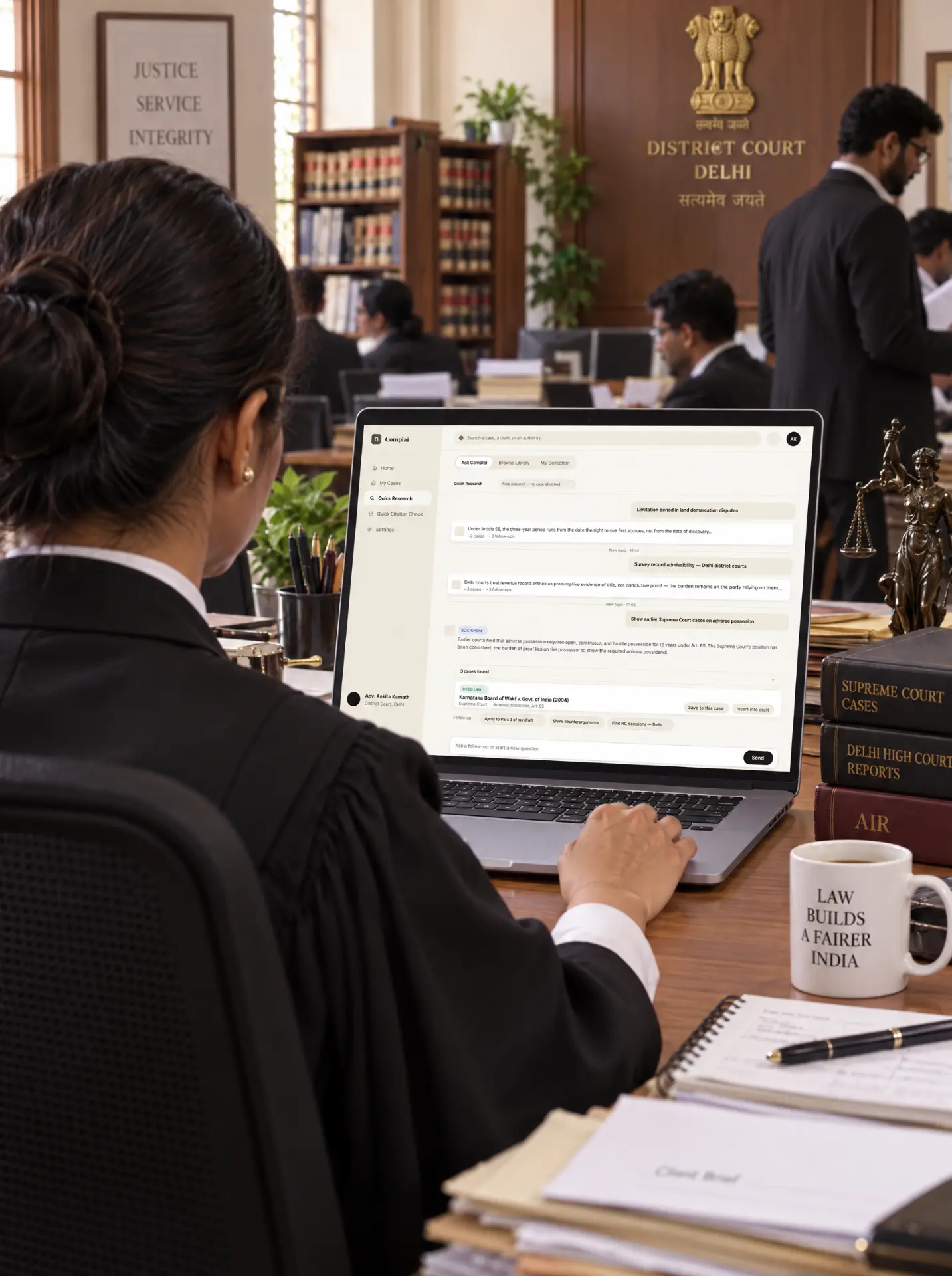
Advocates around a tablet showing the Complai Authority Chain for a land dispute matterAn advocate at a laptop using Complai quick research inside a district court chamberAn advocate reviewing a Complai case summary on a phone outside a district court building
Designed for the day you actually have

Less reconstruction.
More time for judgment.

Complai in practice

Complai helps carry the context between your case file, your authorities and your next draft — without taking the advocate out of the loop.

01

Matter context kept together

Facts, parties, dates and documents stay connected across the life of a matter.

02

Every draft stays reviewable

Complai prepares the work. The advocate reviews and decides what is final.

03

Citation history made visible

See how an authority has been treated before relying on it in court.

04

Nothing filed automatically

No document leaves your desk without your explicit approval.

Pilot feedback

What advocates say after putting Complai to work

I stopped retyping the same case facts into every application. Complai pulls from what I've already uploaded, and I just review the draft before it goes out.
Adv. Priya DeshmukhPune District CourtCivil
It flagged a judgment I was about to cite as overturned. I'd have found that out in front of the judge otherwise.
Adv. Zainab SheikhSaket District Court, DelhiCriminal
Between six hearings a day I don't have time to re-explain my own case to a tool. Complai already knows the parties and the dates from the last filing.
Adv. Karthik SubramaniamChennai City Civil CourtAdvocate
Complai pilot

Bring your next draft. Keep the final word.

Join the early-access pilot for district court advocates. We’ll learn your workflow, help set up a matter, and show you exactly where Complai can take work off your desk.

By requesting access, you agree to our privacy policy. No spam.

Legal papers and a fountain pen arranged beside a reflective sculpture
Support

FAQs

Can’t find the answer you’re looking for? Talk to our team.

Complai can prepare first drafts of petitions, replies, applications and other routine litigation documents from your instructions and case material. You set the structure and review every line.